October 12, 2026
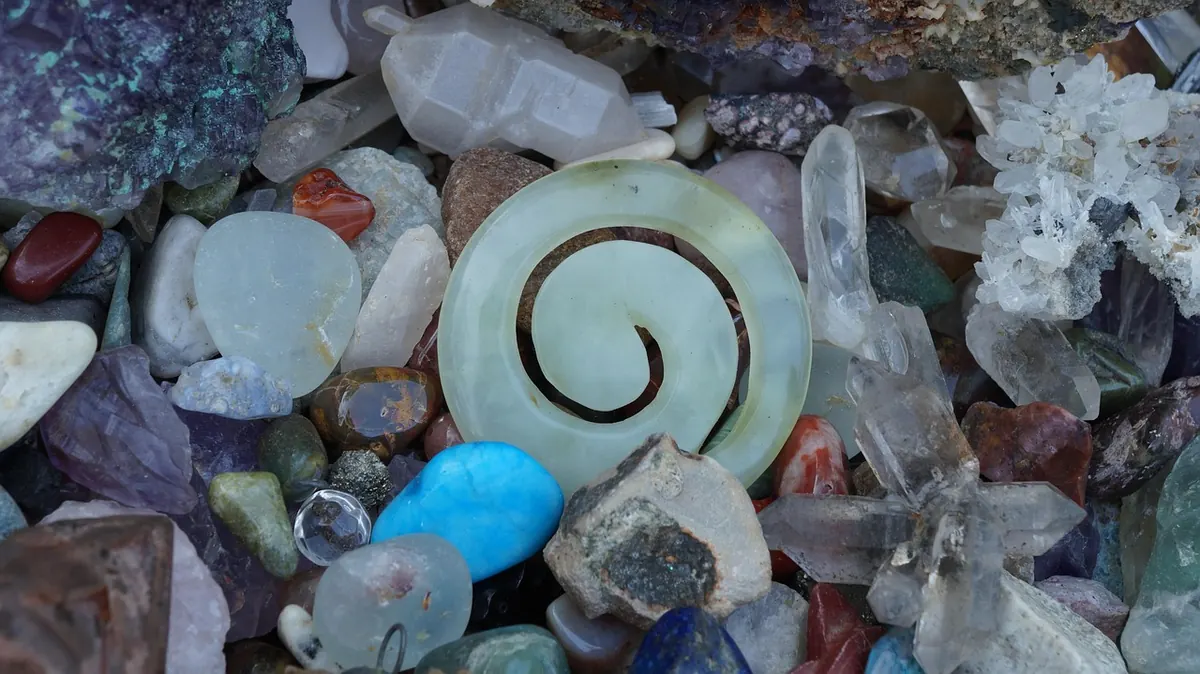
Choosing between natural and polished quartz is less about picking the “real” version and more about matching a finish to a purpose. Both start as the same mineral. One keeps the rough geometry and surface it had when it came out of the ground; the other has been shaped and smoothed until light behaves differently on its face. For a pendant, that difference may decide whether it feels earthy or refined. On a shelf, it may decide whether the piece reads as a specimen or a sculpture. The useful question is not which finish is superior, but which one suits how you will wear, display, and clean it.
That practical framing matters because quartz is unusually versatile. It can be a milky point with chipped edges, a smoky faceted stone in a ring, a rose quartz cabochon, or a clear sphere on a desk. The same mineral can feel rugged, romantic, minimal, or dramatic depending on how it has been treated. Natural and polished finishes simply point that versatility in different directions.
How the Two Finishes Differ
Raw quartz has been cleaned and perhaps trimmed, but its surface remains the one nature gave it. You will see natural terminations, growth lines, cloudy zones, tiny fractures, and sometimes a bit of matrix stone attached. A raw piece can be a single point, a cluster, or a chunk with no symmetrical shape at all. That irregularity is the appeal. It also means no two raw pieces look quite alike, and a piece that looks dull in one light can show surprising color in another.
Polished quartz has been cut, ground, and smoothed. Depending on the shape, it may be tumbled, carved into a sphere or tower, or faceted for jewelry. Polishing does not turn quartz into a different material; it changes the surface. A polished face reflects more light directly, so the stone looks clearer, glossier, and more uniform. Inclusions are still there, but they read as part of a designed object rather than as evidence of how the crystal formed.
It helps to think of the difference as one of emphasis. Raw quartz emphasizes origin: where it came from, how it grew, and what it looked like before a cutter touched it. Polished quartz emphasizes form: the shape someone chose, the symmetry they achieved, and the way the finished piece fits into daily life.
Look and Light: What Each Finish Does Best
Raw quartz is quiet in the best sense. Its surface scatters light rather than throwing it back, so you notice the interior first: milky veils, rutile needles, phantom layers, or a soft tint that seems to come from inside the stone. A raw cluster on a windowsill can look almost matte at noon and quietly luminous at dusk. If you want a piece that feels found rather than finished, this is the look to choose.
Polished quartz sharpens the same qualities. A polished point catches a window’s light along its edges; a sphere pulls a room into a small, curved reflection; a faceted stone flashes when you move your hand. Color often appears deeper on a polished surface because less light is scattered at the surface. Inclusions become more visible, too, which is why polished pieces reward a close look. They can also show fingerprints and fine scratches more readily than raw surfaces.
Before you decide, look at both finishes in daylight and in the light where the piece will live. Tilt the stone. A raw piece may reveal more when you turn it away from direct light; a polished piece often performs best when light hits it squarely. Neither behavior is better. They simply suit different rooms and different moods.
Feel, Wear, and Care
Raw quartz has texture. Edges can be crisp, surfaces can be uneven, and a cluster may have points that catch on a sleeve or a strand of hair. That tactile quality is part of the charm in a display piece or a pendant, but it matters in jewelry that sits against the skin. Polished quartz feels smooth and cool. It slides under a cuff, sits comfortably in a ring, and is less likely to snag clothing. If a piece will be worn often, especially on a hand or wrist, the polished finish is usually the easier companion.
Quartz is a durable mineral, but neither finish is indestructible. Raw points can chip at the tip; polished surfaces can pick up fine scratches and abrasives over time. Settings matter as much as finish: a bezel protects an edge, while open prongs show more of the stone but leave it exposed. For either finish, keep the piece away from harsh household cleaners, store it separately from harder jewelry, and remove it before gardening, gym sessions, or heavy cleaning.
Cleaning is straightforward if you keep it gentle:
- Use lukewarm water with a drop of mild soap and a soft brush or microfiber cloth.
- Rinse well and dry fully, especially around settings and rough crevices where water can linger.
- Skip abrasive powders, scouring pads, and strong chemicals; they can dull a polished surface or lodge in raw texture.
- Be cautious with ultrasonic cleaners if the piece has fractures, a glued setting, or any coating or foil backing.
- Dust raw clusters with a soft brush; wipe polished pieces with a clean cloth before storing them.
Best Uses in Jewelry
Raw quartz shines when the shape is the story. A raw point in a wire-wrapped pendant, a chunky nugget on a leather cord, or a pair of irregular earrings can feel personal and a little wild. Raw quartz also suits statement pieces that are worn occasionally rather than through a full day of typing, cooking, and coat sleeves. If you choose raw for a ring, look for a low profile and a setting that covers the most vulnerable edges.
Polished quartz is the practical choice for everyday jewelry. Cabochons, faceted pendants, small studs, and smooth bracelets sit comfortably and tolerate routine handling better. Polished stones also show detail well: a faceted clear quartz pendant can look crisp with a plain shirt, while a rose quartz cabochon keeps its soft color without needing a fussy setting. For gifts, polished quartz is often the safer bet because it asks less of the wearer.
Consider the metal, too. Raw quartz often pairs naturally with oxidized silver, copper, and leather, where a slightly rugged look feels intentional. Polished quartz can look at home in fine gold, bright sterling, or minimal titanium settings. Neither pairing is a rule, but the combination of finish and setting can make a piece feel either deliberately rustic or cleanly modern.
Best Uses in Decor
In a room, raw quartz works as a specimen. A cluster on a bookshelf, a point on a desk, or a rough chunk beside a lamp brings texture and a sense of place. Raw pieces are forgiving in casual arrangements: they do not need a perfect angle or a spotless surface to look right. Their irregular silhouettes also break up the visual monotony of books, frames, and straight-edged furniture. An amethyst cluster beside a stack of art books can look collected rather than decorated, which is often the goal.
Polished quartz works more like a sculpture. A clear sphere on a coffee table, a rose quartz tower in a bedroom, or a pair of bookends in smoky quartz can add calm and order. Polished pieces tend to suit modern, minimal, and transitional rooms because their surfaces are easier to coordinate with glass, metal, and lacquer. They also catch artificial light well, so they can hold their own in a room that does not get much sun.
Mixed displays can be the most interesting option. A raw cluster set near a polished sphere shows the same material in two moods, and the contrast makes both pieces look more deliberate. Just keep scale in mind: a tiny tumbled stone can disappear beside a large raw point, while a massive polished tower may overpower a delicate cluster. Group by color and height rather than by finish alone.
How to Choose: Questions That Clarify the Decision
If you are torn, ask a few practical questions before you buy:
- How often will it be worn? Daily rings, bracelets, and necklaces usually favor polished finishes; occasional statement pieces can comfortably go raw.
- Where will it sit? A high-traffic shelf, a child’s room, or a desk that gets bumped may be better suited to a polished piece with fewer fragile points.
- What is the focal point? Choose raw if you want to highlight natural growth, inclusions, or matrix; choose polished if you want shape, color, and reflection to lead.
- How much care will you give it? Raw clusters need dusting and gentle handling; polished pieces need wiping and protection from scratches.
- What feeling do you want? Raw quartz tends to feel earthy, personal, and collected; polished quartz tends to feel refined, calm, and designed.
Common Misconceptions About Natural and Polished Quartz
One common assumption is that polished quartz is less “natural” than raw quartz. In material terms, that is not true. A polished quartz stone is still quartz; only its surface has been changed. The more useful distinction is aesthetic and practical, not a question of authenticity.
Another misconception is that raw quartz is always more durable because it has not been cut. In practice, raw points can be fragile at their tips, and rough edges can chip or snag. Polished quartz may scratch, but it usually has fewer delicate protrusions. Durability depends on the specific shape, the setting, and how the piece is used.
Think of raw quartz as a record of formation and polished quartz as a study in form. Both are real; they simply tell different parts of the story.
The Better Finish Is the One That Fits
For jewelry that will be worn often, polished quartz is usually the more comfortable and forgiving choice. For a piece meant to feel found, tactile, or closely tied to the stone’s natural structure, raw quartz has an honesty that polishing can soften. In decor, raw pieces bring texture and a sense of discovery, while polished pieces bring order, reflection, and a more finished look. The best decision is the one that matches your routine, your room, and the way you want the stone to feel in your hand. Neither finish is the “right” one in every case; the right one is the finish you will actually enjoy living with.
Photo: angelsover / Pixabay