October 15, 2026
A quartz listing is a small act of translation. Someone has taken a stone out of the ground, cleaned it, set it under a light, and compressed it into a handful of images on your screen. Your job is to work out how much of the real stone survived that journey.
The encouraging part is that most of what matters is either visible in the photos or can be asked about in a two-line message. What follows is the sequence worth running through before you click buy, whether the piece costs the price of a coffee or considerably more.
Start with the photo set, not the first photo
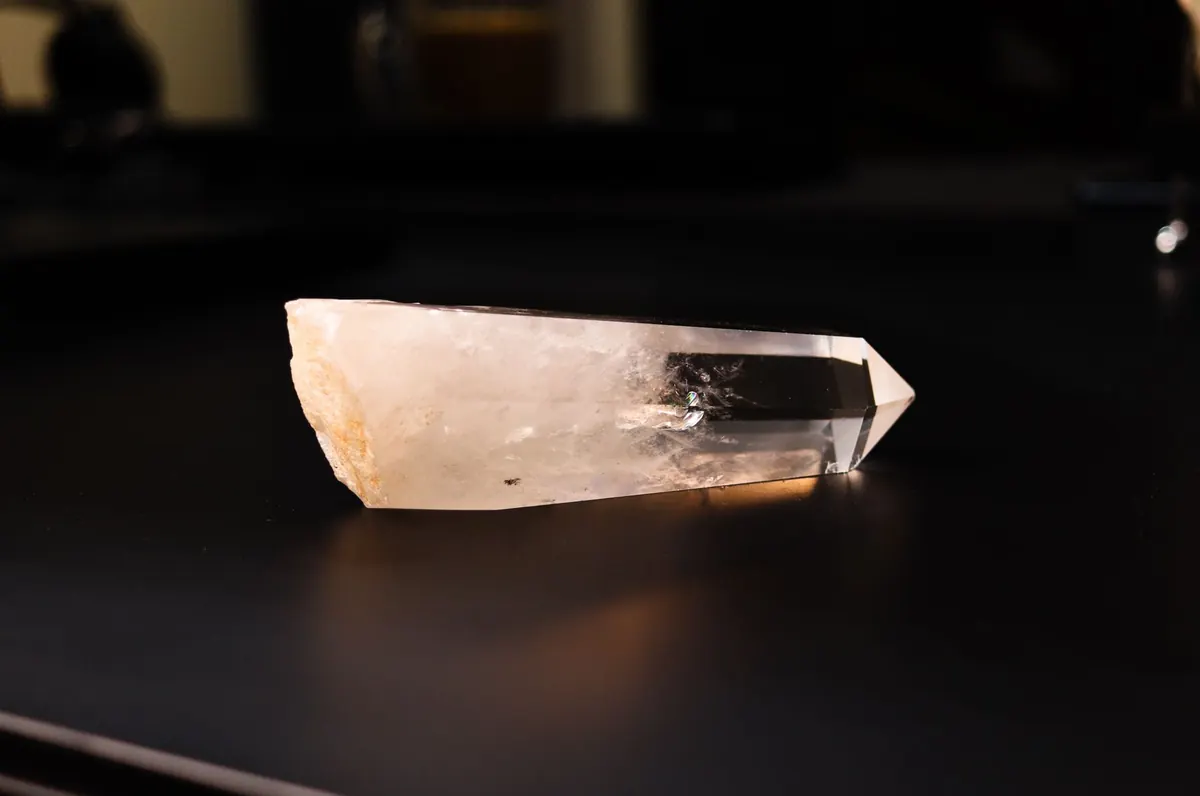
Nearly every seller has one flattering hero shot. It is usually lit from behind, shot on black velvet, and angled to hide the base. That image tells you what the crystal looks like at its best, which is useful, but it is not enough to buy from.
What you want is a set that shows the whole object without flattery. If a listing has only one or two images, ask for more before you decide anything. A seller who is proud of a specimen will usually be glad to send them.
What a complete photo set should include
- A dry, front-lit photo in daylight, with no backlighting
- The reverse side and at least one profile view
- A close macro of the termination and the edges
- A base shot showing how the crystal sits or attaches to matrix
- A short rotation video, ten to twenty seconds, unmoving camera
- Something for scale: a ruler, a coin, a hand
The base shot matters more than most buyers expect. That is where repairs, glued breaks and fresh contact damage tend to show up, and a repaired specimen should always be disclosed rather than discovered.
What inclusions are telling you
Inclusions are not automatically flaws. A chlorite phantom, a spray of rutile needles, a moving bubble in an enhydro, a soft veil of hematite staining — these are often the reason a piece is interesting at all, and they are worth paying for when they are clear and well placed.
The trick is separating character from fragility. A crystal threaded with fractures that reach the surface will chip if you handle it, and it may not survive shipping. A dense cloudy zone can be a healed fracture rather than a growth feature. Neither is a reason to walk away, but you should know which one you are buying.
Ask the seller to point at the inclusions in a photo or video and name them. If the answer is vague — "natural markings" — treat that as an answer about the seller, not about the stone.
Scale, colour and the lightbox problem
Backlighting flatters quartz more than any other single technique. It lifts internal fractures into bright lines, makes a hazy body look glassy, and can push pale smoky tones toward deep brown. None of that is dishonest on its own, but it is not how the stone will look on your shelf.
Colour is the other quiet variable. Phone cameras adjust white balance constantly, and screens vary from one device to another. A neutral reference in the photo — grey card, plain white paper, a coin — gives you something to judge against. So does a shot with the stone dry; wet stones and oiled surfaces read glossier and more saturated than they will at home. If the listing shows a wet specimen, ask for a dry one.
The 10-point checklist
- Full photo set. Multiple angles, both sides, base, and a rotation video.
- Dry daylight shot. No backlight, no water, no oil.
- Scale reference. Dimensions and weight in the description, plus a ruler or coin in frame.
- Termination close-up. Chips, nicks and abrasions should be visible before you buy.
- Base and matrix. Ask directly whether the piece is repaired, reattached or stabilized.
- Inclusions named. Phantoms, needles, two-phase pockets, staining — pointed at, not just mentioned.
- Treatment disclosure. Ask whether colour is natural, and whether the surface has a coating.
- Exact piece. Confirm the photo is of the stone you will receive, not a representative sample.
- Packing and shipping. Double-boxed, tracked, insured where the value justifies it.
- Return terms in writing. Window, condition requirements, and who pays return postage.
Questions that separate a careful seller from a vague one
Most of the checklist can be resolved with one short message. Keep it specific, keep it friendly, and keep a copy of the reply. A sample that works well:
Hi — before I buy, could you send a short video of this piece rotating in daylight, dry rather than wet? Also, are there any chips, repairs, or glued joins, and is the colour natural? Thanks.
A few more worth having ready:
- Is this the exact crystal in the photos?
- What does it weigh, and what are the dimensions at the widest points?
- Can you photograph the base and the tip straight on?
- Has it been cleaned with acid or had any coating applied?
- How will it be packed, and is shipping tracked?
Answers matter, but so does the shape of them. A seller who replies with a fresh photo and a sentence about a small nick at the base is telling you something valuable. So is one who answers a different question than the one you asked.
Shipping, returns and the small print
Quartz travels badly when it is packed in a single layer of bubble wrap. Ask how the piece will be cushioned, whether the termination will be protected separately, and whether the parcel is tracked. For anything expensive, insurance is not an extravagance — it is part of the price of the stone.
Read the return policy before you pay, not after. Note the window, whether the piece must come back in the same condition, and who covers return shipping. Combined lots and custom orders are often excluded, which is reasonable but easy to miss. If a piece is costly, an independent appraisal before purchase is worth considering; valuations vary widely, and no listing should be treated as financial advice.
A habit worth keeping
Save the listing photos and the seller's replies in a folder when you buy. When the crystal arrives, look at it in ordinary daylight on a plain surface and compare it with what you saw on screen. You will learn faster from that five-minute comparison than from any guide, because you will start to recognise the specific tricks that fool your own eye.
Start small with a new seller, ask two questions before you commit to anything significant, and treat a rushed answer as information rather than an obstacle. Buyers who ask careful questions get better stones — and sellers tend to send their better photos to the people who clearly know what they are looking at.
Photo: Mr. Pugo / Pexels